Activities
Dramatic Play
Dress-ups, toy kitchens, prams and props, where imagination takes the lead and social skills flourish.
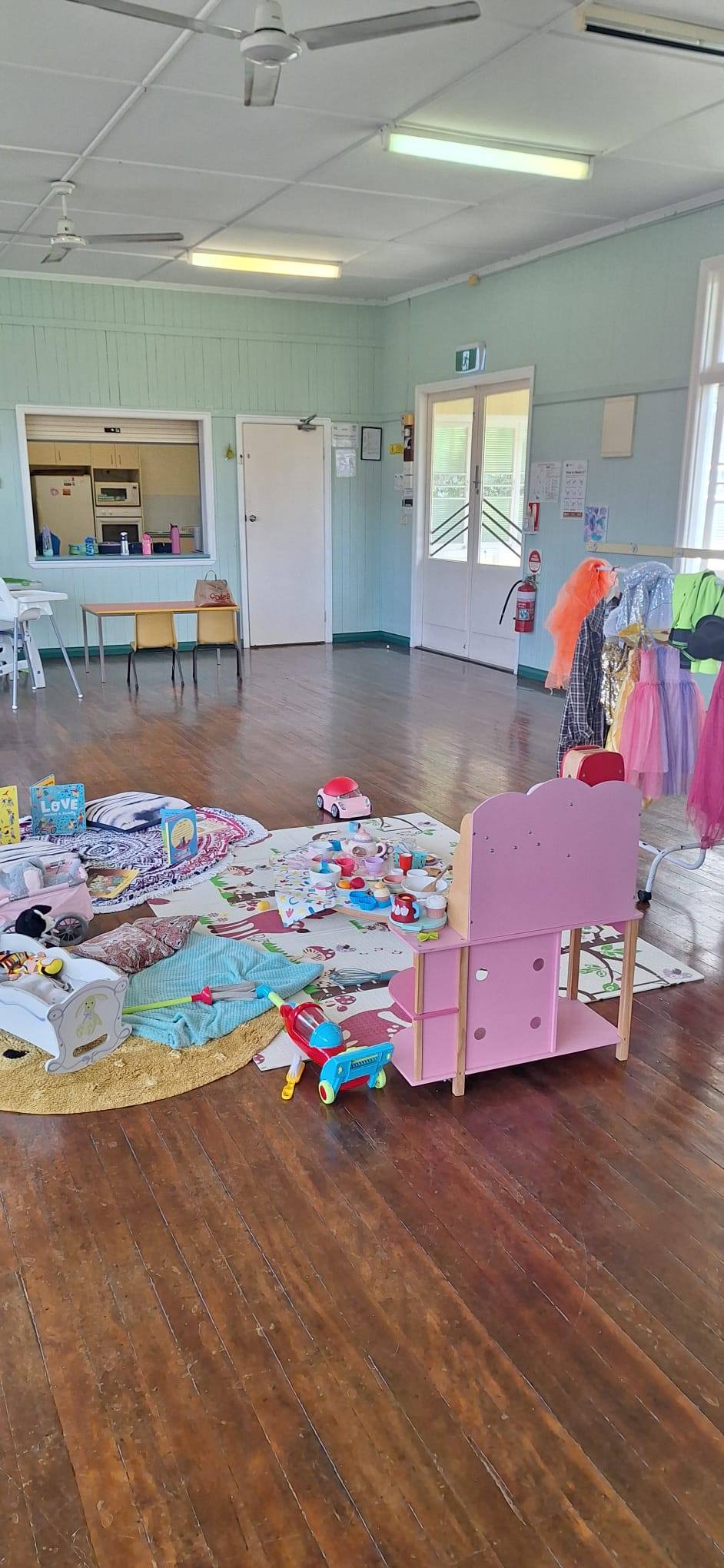
Dress-ups, toy kitchens, prams and props, where imagination takes the lead and social skills flourish.
Dramatic play (also called imaginative play, pretend play or role play) is when children use their imagination to create scenarios, take on roles, and act out stories. It is widely considered to be the most important type of play for social and emotional development in the early years.
Our dramatic play area at Perfect Squiggle is equipped with a toy kitchen stocked with play food and cooking utensils, a dress-up rack with costumes for all kinds of characters, a baby doll station with prams and care items, and a range of small world figures and prop boxes that change regularly to spark new stories.
When children pretend, they're not just having fun; they're doing serious cognitive, social and emotional work. Psychologists and educators have long understood dramatic play as the primary vehicle through which young children process their experiences, develop language, and learn to navigate the social world.
Playing with others requires negotiating roles, sharing props, resolving conflict and co-creating stories: the full social curriculum of the early years.
Role play lets children safely explore and process big emotions (fear, anger, sadness) by projecting them onto characters and scenarios.
Taking on another character's perspective, such as playing the baby, the doctor or the scared animal, builds the capacity to understand others' feelings.
Dramatic play is extraordinarily rich in language. Children narrate, dialogue, negotiate and explain as they play, building vocabulary and conversation skills rapidly.
Maintaining a role, following the rules of a shared scenario, and planning what happens next all exercise the brain's executive function: focus, flexibility and self-control.
Open-ended role play invites children to invent. There's no right answer, no template, just imagination. This is where creative thinking grows.
On any given Monday you might see a group of toddlers turning the toy kitchen into a busy café, carefully serving "coffee" to waiting customers. Or an older child methodically putting the baby doll to sleep, complete with a lullaby. Or two children who've never met before, suddenly united in a game where the dress-up capes turn them into superheroes defending the block tower.
These scenarios emerge entirely from the children themselves. Our role is to provide rich, open-ended materials and time, then step back.
Dramatic play offers wonderful opportunities for caregivers to connect with children, but it requires a particular kind of participation: following the child's lead completely. When your child assigns you a role, "You be the customer and I'll make the soup," accept it and play within their story. Resist redirecting, correcting or taking over the narrative. The moment an adult takes the lead, the richness of the child's own imaginative work diminishes.
If your child is playing alone, you can deepen their play by asking genuine, curious questions about what's happening: "Oh, is the baby sick?" or "What's on the menu today?" These questions signal that you value their story without hijacking it.
You don't need a fully stocked dramatic play area at home. A cardboard box becomes a car, shop, or rocket ship. Old handbags, scarves and hats from an op shop make a dress-up box. A set of small figures (animals, people, dinosaurs) and a blanket on the floor creates a whole world. The key is providing open-ended props and uninterrupted time to play.
Explore more of what we offer at Perfect Squiggle.
Playgroup runs every Monday, 9:30am–11:30am at Bald Hills Uniting Church. $10 per family.
Book a Spot