Activities
Literacy Corner
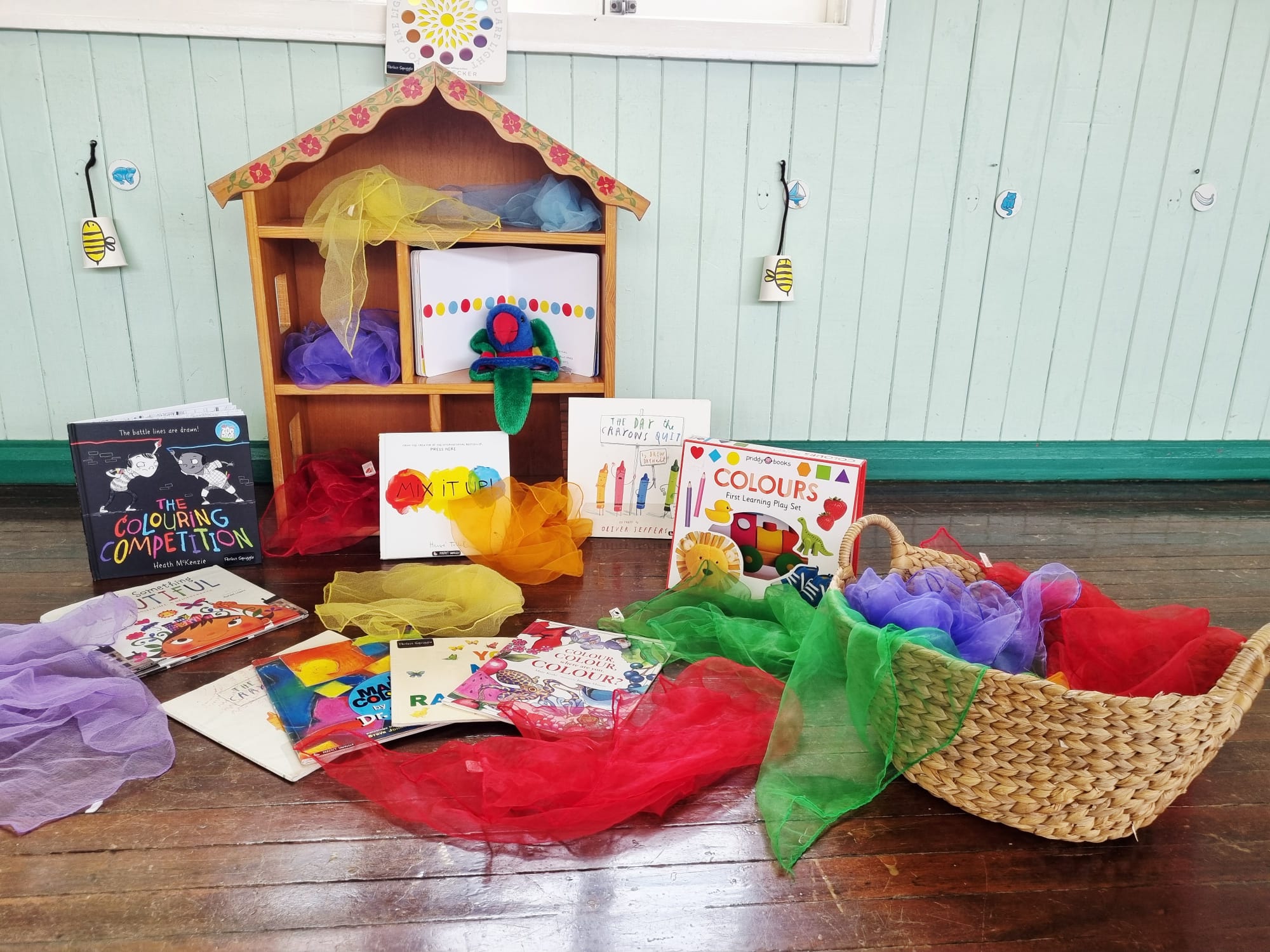
Cosy reading nooks, board books and storytelling props that plant the seeds of a lifelong love of reading.
Cosy reading nooks, board books and storytelling props that plant the seeds of a lifelong love of reading.
Tucked into a warm corner of our hall, our literacy area is designed to feel inviting: soft cushions, a low-level bookshelf displaying colourful board books face-out, puppets for storytelling, and a small selection of prop boxes that bring favourite stories to life. Children can settle here independently or share the space with a caregiver for one-on-one reading time.
We stock our shelves with a rotating selection of quality picture books and board books across a range of themes: animals, families, emotions, counting, seasons and imagination. Every few weeks we refresh the selection to keep it engaging and introduce children to new authors and illustrators.
Many parents assume literacy learning begins when children start school and learn the alphabet. In reality, the foundations of reading and writing are laid in the first three years of life, through listening to language, being read to, noticing print in the environment, and developing the fine motor skills needed to hold a pencil. Our literacy corner supports all of these areas.
Every new book introduces new words. Children who are read to regularly have significantly larger vocabularies before they start school.
Rhyming books, repetitive texts and songs build awareness of sounds in words, the single strongest predictor of reading success.
Handling books, turning pages and watching a caregiver follow text with their finger teaches children how books work: left to right, top to bottom.
Talking about stories, such as predicting what happens next or asking why a character feels sad, builds deep comprehension skills that matter more than decoding.
Sitting for a story requires focus and patience. Regular reading time gradually extends a child's ability to concentrate on a single thing.
Stories about characters navigating feelings give children language for their own emotions and help them develop empathy for others.
The most powerful thing you can do for your child's literacy development is read aloud to them every day, and the quality of how you read matters as much as how often. Here are a few approaches that make story time richer:
Follow your child's lead. It's perfectly fine if they only want to look at the pictures, turn pages at random, or ask you to read the same page five times. All of this is meaningful engagement.
Talk about the pictures. "What can you see on this page? Look, the duck is hiding behind the tree!" Picture talk builds vocabulary and observation skills.
Use different voices. Giving characters distinct voices makes stories come alive and models expressive language for children to absorb.
Ask open questions. "What do you think will happen next?" or "How do you think the bear is feeling?" invites children to think rather than just listen.
Our shelves are stocked with trusted favourites like The Very Hungry Caterpillar, Guess How Much I Love You, Where is the Green Sheep? and Possum Magic, as well as newer titles that reflect the diversity and experiences of the families in our community. If you have a favourite you'd like to recommend, we'd love to hear about it!
Explore more of what we offer at Perfect Squiggle.
Playgroup runs every Monday, 9:30am–11:30am at Bald Hills Uniting Church. $10 per family.
Book a Spot