Activities
Gross Motor Play
Climbing, crawling, jumping and tumbling: big body movement that builds strength, coordination and unstoppable confidence.
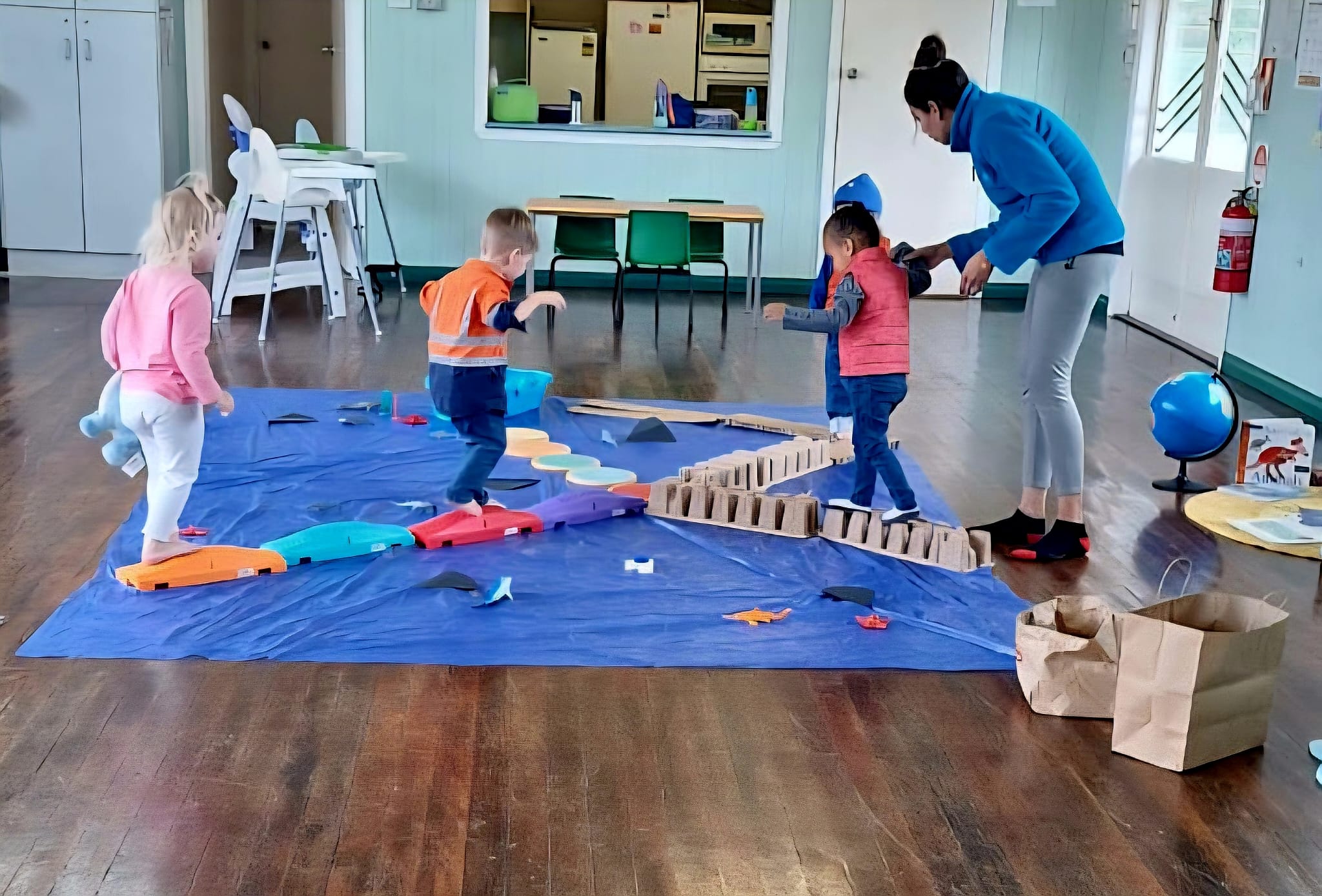
Climbing, crawling, jumping and tumbling: big body movement that builds strength, coordination and unstoppable confidence.
Gross motor play refers to activities that use the large muscle groups: legs, arms, back and core. At Perfect Squiggle, our gross motor setup changes each week and typically includes crawl-through tunnels, foam climbing structures, balance beams, stepping stones, teepees to climb in and out of, push-and-pull toys, and open floor space for running, rolling and jumping.
Young children have a biological drive to move. This isn't restlessness; it's development. When children climb, crawl and jump, they are literally building their brains as well as their bodies.
Physical development in the early years provides the foundation for everything that follows, academic learning included. Research consistently shows that children who have strong gross motor skills tend to have better concentration, emotional regulation and readiness for school. Here's why:
Climbing and balancing build core muscles that children need to sit upright at a desk, hold a pencil and focus on tasks.
Navigating obstacles, stepping, hopping and catching develops bilateral coordination: the ability to use both sides of the body together.
Moving through, over and under physical structures helps children understand their body in space, a skill that underpins reading and maths.
Safe, supervised physical challenges teach children to assess risk, make decisions and understand their own physical limits.
Physical movement is one of the most powerful regulators of the nervous system. Active play helps children manage big emotions and energy levels.
Successfully navigating a physical challenge, such as climbing higher than yesterday or crawling through a tunnel solo, builds genuine self-belief.
Our indoor gross motor setup is designed to offer a range of challenge levels so children from 6 months to 5 years can all participate meaningfully. For younger babies, soft foam mats, tummy time cushions and low-level climbing wedges provide safe opportunities to practise rolling, pushing up and pulling to stand. For mobile toddlers, tunnels, stepping stones and balance boards offer satisfying physical challenge. Older preschoolers find joy in more complex obstacle courses and imaginative play within the teepee and climbing structures.
During gross motor play, your role is mostly to observe, encourage and stay nearby rather than direct. Resist the urge to lift children off equipment they're struggling with; the struggle itself is where the learning happens. Spot them for safety, but let them work out how to get down on their own wherever possible. A calm "You can do it. What could you try?" is far more powerful than a rescue.
That said, getting on the mat and playing alongside your child, crawling through tunnels together or chasing each other across the room, is pure joy and brilliant for connection.
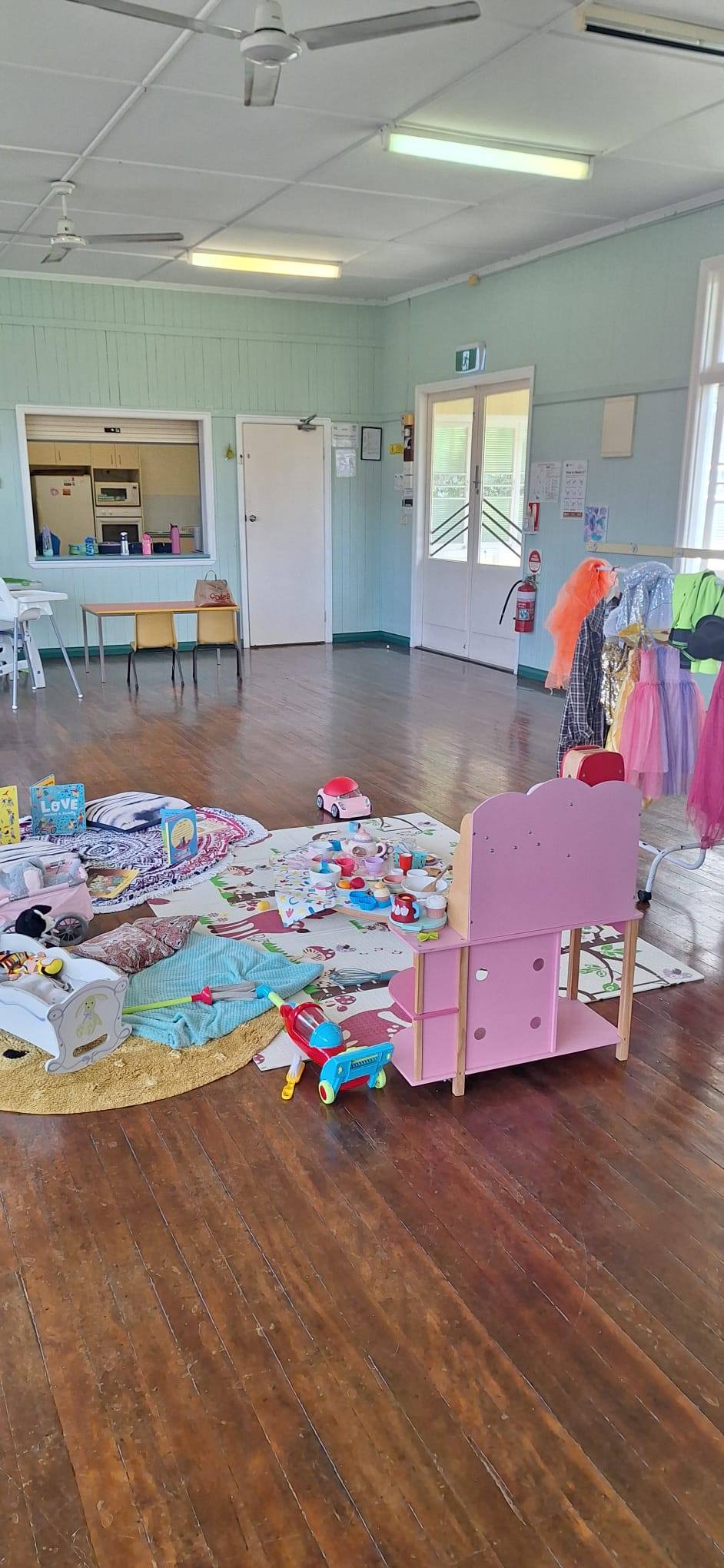
Queensland's weather can make outdoor play unpredictable, which is part of why our indoor gross motor setup is so valuable. Our hall gives children a safe, spacious environment to move their bodies fully regardless of the weather, something that can be hard to find in a home setting, particularly for families in apartments or smaller homes.
Explore more of what we offer at Perfect Squiggle.
Playgroup runs every Monday, 9:30am–11:30am at Bald Hills Uniting Church. $10 per family.
Book a Spot