Activities
Building & Blocks
Stacking, balancing and creating — block play is where little engineers, architects and storytellers are made.
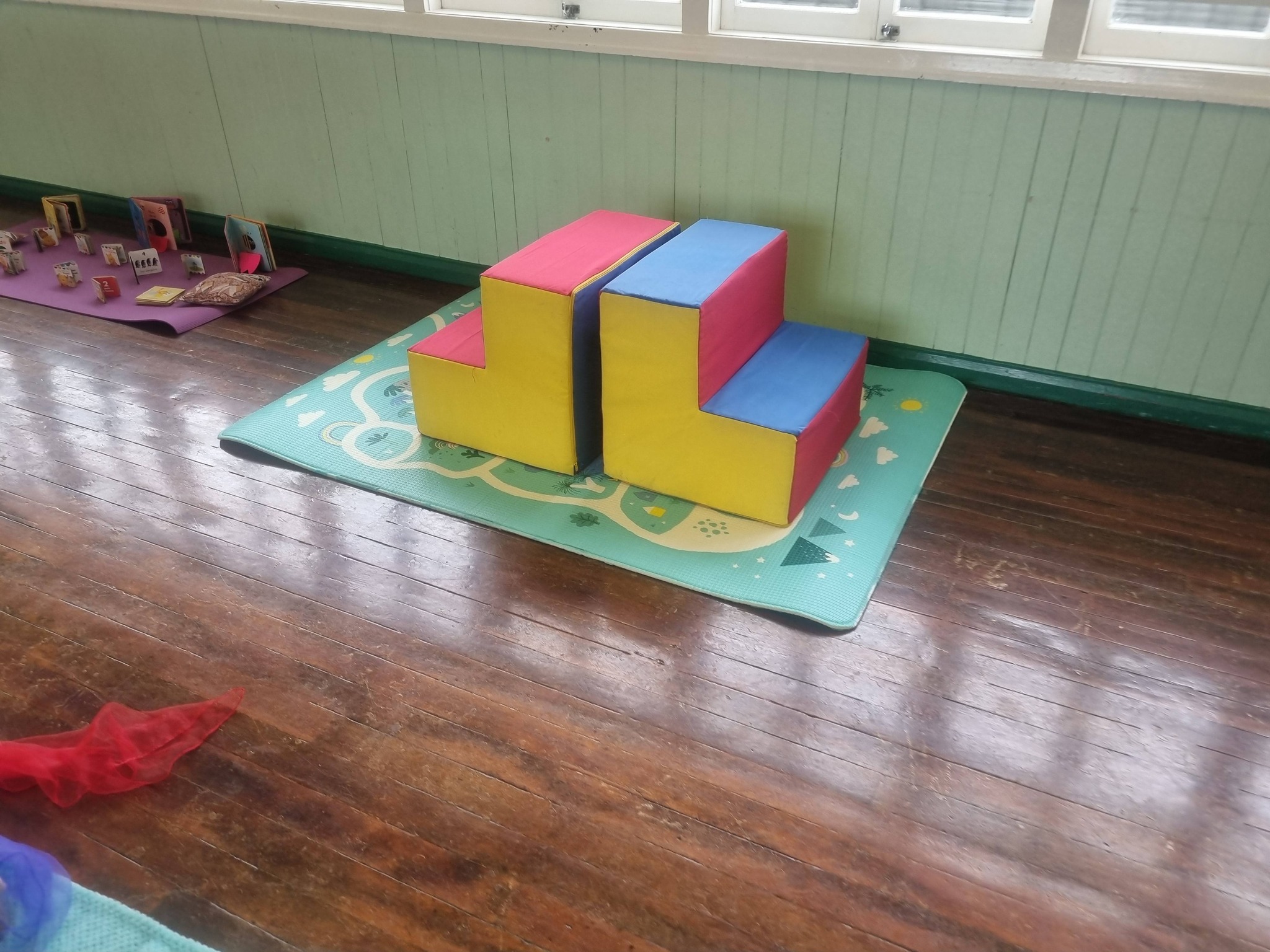
Stacking, balancing and creating — block play is where little engineers, architects and storytellers are made.
Our building area features large soft foam blocks in a range of shapes, sizes and colours — lightweight enough for even the smallest hands to lift and stack, but substantial enough to build structures you can actually walk through or hide behind. We also incorporate smaller wooden unit blocks and Duplo for children who are ready for more detailed construction.
The block area is always one of the most popular spots in the room. Something magical happens when children are given space, time and good materials — towers appear, roads get built, castles are defended, and friends are invited in to build something even bigger together.
Block play might look like "just stacking things up," but decades of early childhood research have confirmed it as one of the richest learning experiences available to young children. It touches nearly every domain of development simultaneously.
Balancing, predicting whether a structure will fall, and figuring out why it does is real physics — the beginning of scientific thinking.
Block play develops spatial visualisation skills — one of the strongest predictors of later success in mathematics and engineering.
Sorting by size, creating symmetry, counting blocks and noticing patterns all build number sense and geometry concepts naturally.
When a tower keeps falling, children must think about why and try something different — the essence of engineering design thinking.
Building with others generates rich conversation: bigger, heavier, taller, beside, underneath — positional and descriptive language in action.
Collaborative building requires negotiation, turn-taking, sharing ideas and managing the inevitable disappointment of a knocked-down tower.
Children move through predictable stages of block play as they develop, and it's helpful for caregivers to know what to expect at each stage:
Carrying (12–18 months): Young toddlers carry blocks from place to place without building. This is exploratory and completely normal — they're learning properties like weight and texture.
Stacking and lining up (18–24 months): Simple towers and rows appear. The joy is in the stacking (and the knocking down).
Bridging (2–3 years): Children begin to create spans between two upright blocks — a significant cognitive leap that requires planning ahead.
Enclosures (3–4 years): Buildings with walls appear, often representing houses, zoos or garages. Dramatic play begins to incorporate structures.
Elaborate structures (4+ years): Multi-level buildings, symmetrical patterns and complex roads and cities emerge, often with stories attached.
The most important thing caregivers can do during block play is provide time, space and materials — then step back. Comment on what you notice without directing: "You made it really tall!" or "I wonder what would happen if you put that big block on the bottom." If a child invites you to build with them, follow their vision rather than redirecting toward your own.
Explore more of what we offer at Perfect Squiggle.
Playgroup runs every Monday, 9:30am–11:30am at Bald Hills Uniting Church. $10 per family.
Book a Spot